
CarbonCentric: A New Digital Home for Smarter Carbon Management

In construction, carbon data has too often been treated as something to review after the fact - measured retrospectively, reported periodically and acted on too late to influence the decisions that matter most.
But as expectations around whole-life carbon continue to grow, project teams need more than static assessments and spreadsheet-based workflows. They need live insight, earlier visibility and better tools to turn data into action.
Smarter Carbon Management
That is exactly why we are proud to highlight the launch of the new CarbonCentric website: a dedicated digital home for a platform designed to help the construction industry measure, understand and reduce project carbon in real time. CarbonCentric connects supply-chain data, materials intelligence and project workflows in one place, enabling project teams to manage carbon not as a compliance exercise, but as a live performance metric while decisions are still being made.
The new website reflects the maturity and ambition of the platform itself. It presents CarbonCentric clearly as a practical, field-tested solution for developers, contractors, designers, consultants and supply-chain partners who are serious about improving carbon outcomes across the project life cycle. Rather than waiting until the end of procurement or construction to understand impact, CarbonCentric brings carbon intelligence into the day-to-day flow of project delivery.
At its core, CarbonCentric is built to solve a familiar industry problem. Across many projects, carbon information remains fragmented between consultants, contractors, subcontractors and suppliers. Data arrives in different formats, at different times and often with limited transparency. The result is that opportunities for reduction are missed, reporting becomes reactive, and project teams struggle to maintain a clear audit trail from design through to delivery. Mainer’s recent writing on CarbonCentric has described this challenge directly: fragmented data, delayed decisions and missed opportunities are still holding back better carbon performance across the built environment.
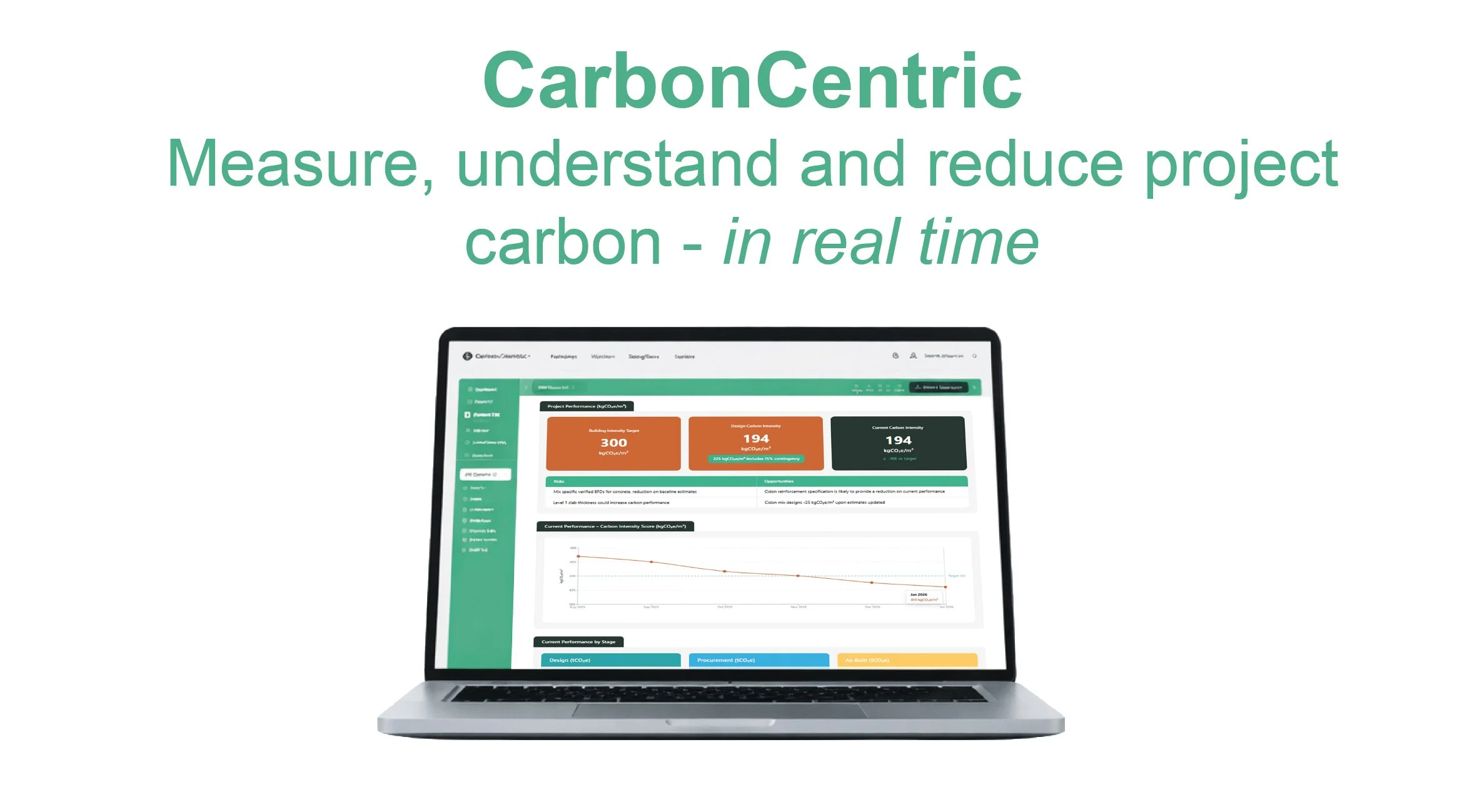
CarbonCentric has been developed to change that dynamic.
The platform gives teams access to real-time dashboards that update as new data is submitted, helping users monitor carbon performance throughout a project rather than at isolated reporting points. It supports direct supply-chain carbon data capture, creating a more transparent and structured data ecosystem. It also enables carbon hotspot analysis, allowing teams to identify the materials, suppliers or packages driving the greatest emissions, and provides scenario modelling so alternative design or procurement decisions can be tested before they are locked in. In addition, CarbonCentric incorporates verified environmental data, including EPD information, helping teams make more informed material selections with greater confidence.
These are not features for their own sake. They are tools that support better decisions at the moments when better decisions are still possible.
That distinction matters. Carbon management is most valuable when it influences design coordination, procurement choices, specification reviews and supplier engagement early enough to reduce emissions in practice. CarbonCentric is built around that principle. As the platform states, the aim is to move beyond spreadsheets and retrospective reporting, replacing them with granular supply-chain data and live insight that informs delivery in real time.
Proving Value
Just as importantly, CarbonCentric is not theoretical. It is already proving its value on live and completed developments.
One of the clearest examples is 11 & 12 Wellington Place, Leeds, a major commercial office development that became the origin point for CarbonCentric itself. The project team identified the need for a better way to manage carbon data across consultants, contractors and the supply chain. By improving how data was captured, analysed and shared, the project demonstrated how earlier intervention and better optioneering could support a 40% reduction against the Stage 3 baseline.
Another strong example is The Langfield, London, a redevelopment in Victoria transforming two existing office buildings into 80,000 sq ft of flexible workspace. With its reuse-first design approach and low-carbon ambitions, the project required robust support for tracking carbon and informing decisions during design and development. CarbonCentric was deployed to help provide exactly that visibility, supporting the team’s focus on sustainability and embodied carbon reduction.
Meanwhile, at South Cambridge Science Centre, Dales Manor, CarbonCentric has been used on a major life sciences development where technical requirements are especially demanding. Laboratory buildings are among the most energy-intensive and carbon-sensitive asset types, and the project team needed dependable insight to assess materials, structural systems and building-services strategies while staying aligned with ambitious performance targets. CarbonCentric supported continuous carbon tracking and design optimisation on the project, which reports 876 kgCO2e/m2 whole-life carbon alongside targets for Net Zero Carbon operation, BREEAM Excellent and an EPC A rating.
Taken together, these case studies show that CarbonCentric is not just helping teams report carbon better - it is helping them manage carbon better. The platform’s own published figures state that it is delivering average savings of 323 kg CO2e/m² across projects, reinforcing the value of earlier, data-led decisions during procurement and construction. Mainer’s February announcement of CarbonCentric v2 also highlighted average savings across completed projects including 11 & 12 Wellington Place, 4 Angel Square and Science Centre Dales Manor, underlining that the platform is already delivering measurable outcomes in practice.
CarbonCentric, built by carbon experts
The launch of the new CarbonCentric website is therefore more than a branding milestone. It is a statement about where construction carbon management is heading. As clients, contractors and project teams face growing pressure to evidence progress against net zero goals, the industry needs tools that are practical, scalable and embedded within real delivery workflows. CarbonCentric has been built by carbon experts for exactly that purpose: to help the construction ecosystem move beyond static reporting and towards continuous, informed carbon management.
For organisations looking to strengthen carbon visibility across their projects, engage the supply chain more effectively, and identify reduction opportunities sooner, the new website offers a clear window into what CarbonCentric can do.
Experience CarbonCentric yourself
If you want to see how CarbonCentric works in practice, now is the time to explore it. Visit the new website, review the case studies, and book a demo to discover how real-time dashboards, supply-chain data capture, hotspot analysis, scenario modelling and project reporting can support measurable carbon reduction on your next development.
The CarbonCentric team’s demo journey is designed to show exactly how the platform can help teams capture data, analyse performance and deliver better outcomes across the construction life cycle.
To book a CarbonCentric demo, contact us athello@mainer.co.uk
Please click below for more information on Mainer’s Services:

LCA

EIA

BREEAM

Building Physics

Fitwel

Scope 3 Emissions

Planning Statements

ESG