

The built environment is under pressure to change. With 39% of global energy-related emissions linked to buildings, it's clear we need more than incremental improvements; we need a complete shift in how we think about carbon.
Whole Life Carbon Assessment (WLCA) offers a promising solution. Unlike traditional approaches that focus solely on energy use during a building's operation, WLCA considers the entire lifecycle: from the raw materials used in construction to the emissions generated during operation, maintenance, and even demolition. It provides a full picture view of a building's carbon footprint, and with that, a powerful opportunity to reduce it.
Embodied vs. Operational Carbon: What's the difference?
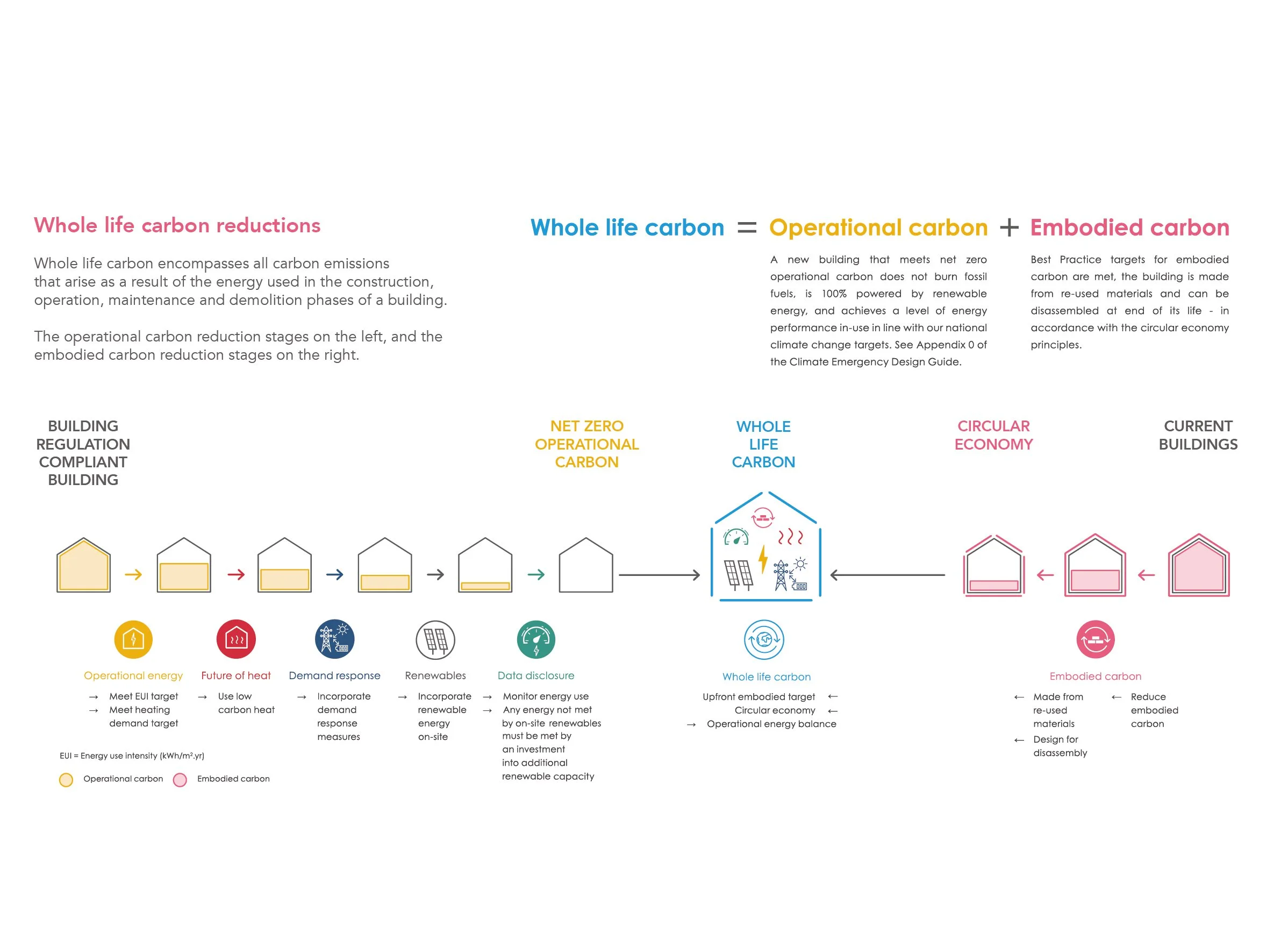
To understand the value of WLCA, it's important to distinguish between the two main types of emissions it captures:
Operational carbon refers to emissions from heating, cooling, lighting, and other building operations.
Embodied carbon includes emissions from producing, transporting, and installing materials, as well as maintenance, refurbishment, and end-of-life disposal.
For decades, sustainability efforts focused almost entirely on operational emissions. But as buildings become more energy-efficient, embodied carbon has become a bigger piece of the puzzle, often making up more than half of a building's total carbon impact.
This is where WLCA really comes into its own. It doesn't just support sustainable design decisions; it demands them.
Source: Net Zero | LETI
Why WLCA is essential for Net-Zero design
True net-zero isn't just about installing solar panels or switching to low-energy lighting. These upgrades matter, but they only address a portion of a building's total carbon impact. To achieve real, lasting results, carbon needs to be considered from the very beginning before any planning application is submitted. Before materials are specified. Before the ground is broken.
By embedding WLCA into the early design process, developers gain access to meaningful, project-specific data that supports better decision-making. Instead of relying on assumptions or averages, WLCA provides a clear picture of how different design choices will affect both embodied and operational carbon emissions over time.
For example, a design team might be weighing up two structural systems: one using traditional concrete and steel, and another that incorporates recycled materials or modular timber. With WLCA, they can compare the carbon implications of each—alongside cost, availability, and durability—before locking anything in. The same goes for insulation types, glazing systems, HVAC equipment, and even site layout. Every choice can be viewed through a carbon lens.
This kind of foresight doesn't just lead to lower emissions; it also enables more effective management of resources. It leads to smarter projects. WLCA helps uncover efficiencies that might otherwise be missed. Swapping out one material might slightly raise upfront costs but significantly reduce long-term carbon and maintenance demands. Conversely, chasing the lowest-cost option without this insight might save money today, but it could result in expensive retrofits down the line to meet future compliance or ESG requirements.
In a landscape where sustainability and financial viability are increasingly linked, WLCA gives developers and project teams the information they need to strike the right balance, without compromising either goal.

Source: Net Zero | LETI
Responding to Regulatory and ESG pressures
The move toward WLCA isn't just best practice. It's fast becoming an expectation.
In the UK, national and local planning frameworks are increasingly mandating assessments of embodied and whole-life carbon. BREEAM and other green certification schemes now reward projects for incorporating WLCA into design and reporting. With the second edition of the RICS WLCA standard offering a clear methodology, the industry now has a consistent way to assess and benchmark carbon across the entire building lifecycle.
Meanwhile, investors and financial institutions are pushing hard on Environmental, Social, and Governance (ESG) metrics. WLCA plays a growing role in ESG reporting by offering clear, auditable data on carbon performance. As pressure mounts to disclose Scope 3 emissions —those indirect emissions embedded across the supply chain —WLCA helps businesses measure what matters and take action.
In short, WLCA isn't just for compliance. It's for confidence, knowing that every design decision is backed by real data, and every tonne of carbon accounted for contributes to a future that's not just greener, but smarter, more resilient, and truly sustainable.
How the WLCA process works?
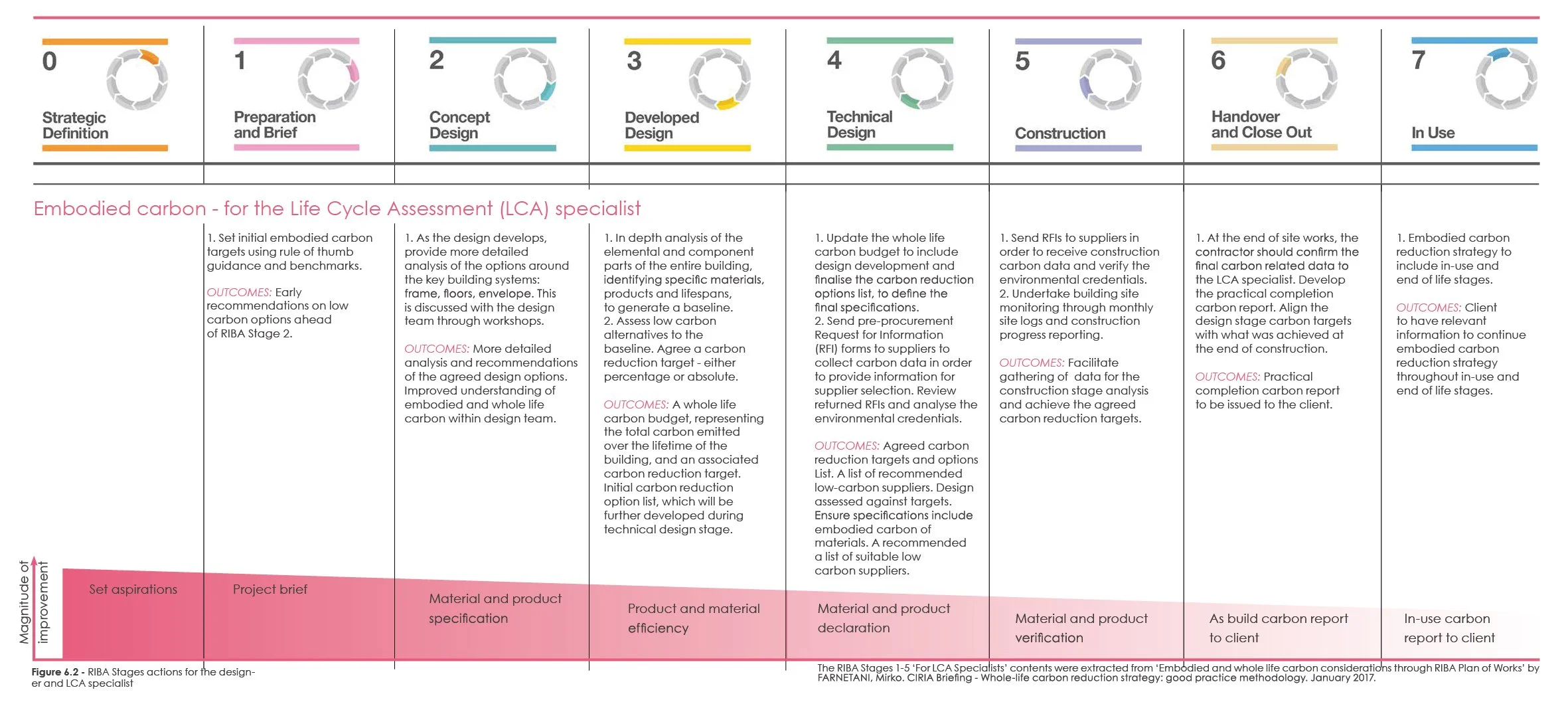
A Whole Life Carbon Assessment typically follows a five-stage approach:
1. Define the Scope
The first step is to establish what will be assessed and where the boundaries lie. Will the assessment cover just one building or an entire development? Is the focus limited to embodied and operational carbon, or will it include lifecycle stages like demolition and disposal? Clarity here is essential to ensure consistency, comparability, and relevance to the project's goals.
2. Gather Data
Accurate data is the backbone of any WLCA. This includes architectural drawings, BIM models, material specifications, and Environmental Product Declarations (EPDs) that provide detailed insights into the carbon intensity of specific products. At early stages, this data may be high-level or based on assumptions, but it should become more precise as the design evolves.
3. Appoint a Qualified Assessor
WLCA is both technical and contextual. Appointing a qualified professional, ideally with experience in the relevant sector, ensures that the assessment is robust, compliant with current standards, and tailored to the project's unique requirements. Assessors interpret data, model emissions, and help the design team translate findings into practical design decisions.
4. Review and Report Findings
The results of the assessment should be clearly documented and shared with the wider project team. Using standardised frameworks, such as the International Cost Management Standard (ICMS 3), allows for consistent reporting and benchmarking across projects. Transparent reporting supports regulatory submissions, ESG disclosures, and stakeholder engagement
5. Repeat and Refine
WLCA is not a one-off exercise. It should be continuously revisited and refined at key project milestones, from concept design through to technical design, construction, and even post-occupancy. Each iteration allows the team to test new options, respond to supply chain changes, and ensure that carbon performance targets remain achievable and on track.
The earlier WLCA is introduced, the greater the potential for impact.
Source: Net Zero | LETI
What it means for clients
For clients and developers, WLCA delivers far more than regulatory compliance. It's a strategic tool that informs smarter, more future-proof business decisions.
Demonstrates Commitment to Sustainability
WLCA provides clear, auditable evidence that a project is addressing environmental impact in a meaningful way. This reassures planning authorities, helps meet emerging regulations, and aligns with local and national climate goals. It also supports applications for sustainability certifications such as BREEAM, LEED, or NABERS.
Meets Investor and Occupier Expectations
Green buildings aren't just better for the planet. They're more attractive to investors, lenders, and tenants. With environmental performance now a key part of ESG reporting and financial risk assessments, WLCA helps position assets as low-risk, high-transparency investments. For tenants, especially corporations with their own carbon reduction targets, WLCA demonstrates that the building can support their sustainability commitments.
Future-Proof Your Portfolio
WLCA isn't just about reducing emissions today. It helps anticipate tomorrow's challenges. By understanding the full carbon lifecycle, clients can make informed decisions that improve resilience to future policy shifts, rising carbon taxes, or resource scarcity. Projects that embed WLCA early are better prepared to meet evolving regulations, investor scrutiny, and market expectations.
Supports Cost-Efficient Net Zero Strategies
Many sustainability measures are only effective and financially viable if considered from the start. WLCA highlights opportunities to reduce emissions without blowing the budget. It enables clients to prioritise interventions that deliver both carbon savings and long-term value, helping to avoid expensive retrofits or rework later in the project lifecycle.
Strengthens Brand and Reputation
In an increasingly climate-conscious world, demonstrating leadership in carbon reduction enhances a company's brand, fosters trust with stakeholders, and creates a competitive advantage. WLCA shows that your organisation isn't just reacting to sustainability trends but actively shaping them.
Ready to start your WLCA journey?
At Mainer Associates, we work closely with clients to guide them through the entire Whole Life Carbon Assessment process. From early-stage strategy to post-completion reporting, we help you measure, manage, and reduce carbon across the full lifecycle of your development.
Our novel CarbonCentric application and management service provides transparent, real-time monitoring of embodied carbon targets, dealing directly with the project supply chain from procurement, through to completion. The service facilitates optioneering and timely, accurate reporting of the data required to successfully complete the assessment process.
Whether you're planning a new build or retrofitting an existing asset, we're here to help you make informed choices that support both the planet and your bottom line.
Get in touch to speak with one of our WLCA consultants today.
Please click below for more information on Mainer’s Services:

LCA

EIA

BREEAM

Building Physics

Fitwel

Scope 3 Emissions

Planning Statements

ESG