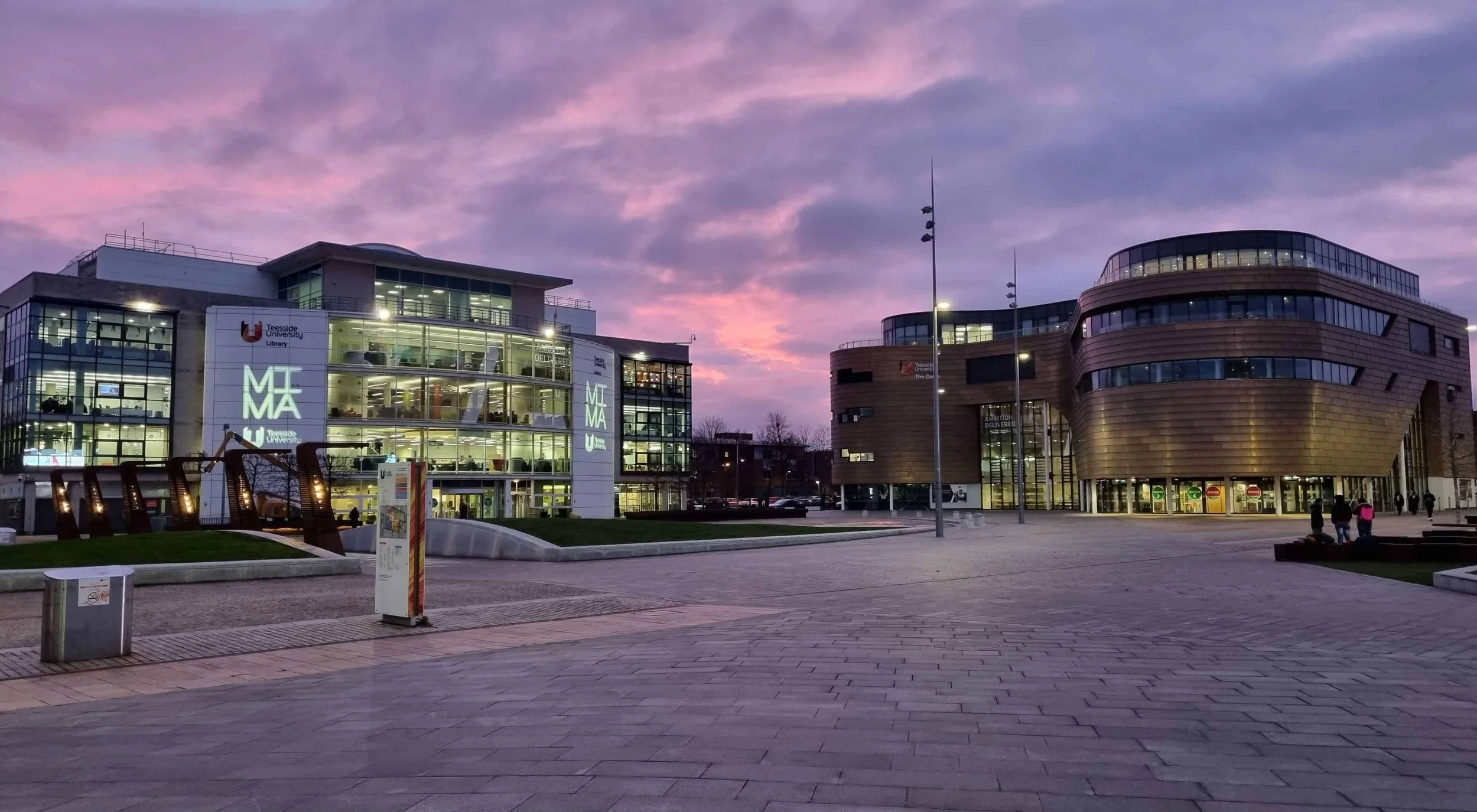
Teesside University, Middlesborough
Campus Landmarks Designed with Sustainability at their Heart
Mainer Associates supported Teesside University and main Contractor Wates in delivering two landmark projects on its Middlesbrough campus – the Digital Life and BIOS buildings. Our team provided comprehensive sustainability consultancy, ensuring each development met ambitious environmental and performance goals.
Through these services, Mainer Associates contributed to creating sustainable, future-ready facilities that will support Teesside University’s vision for innovation, research, and learning.










BIOS Building, Teesside University
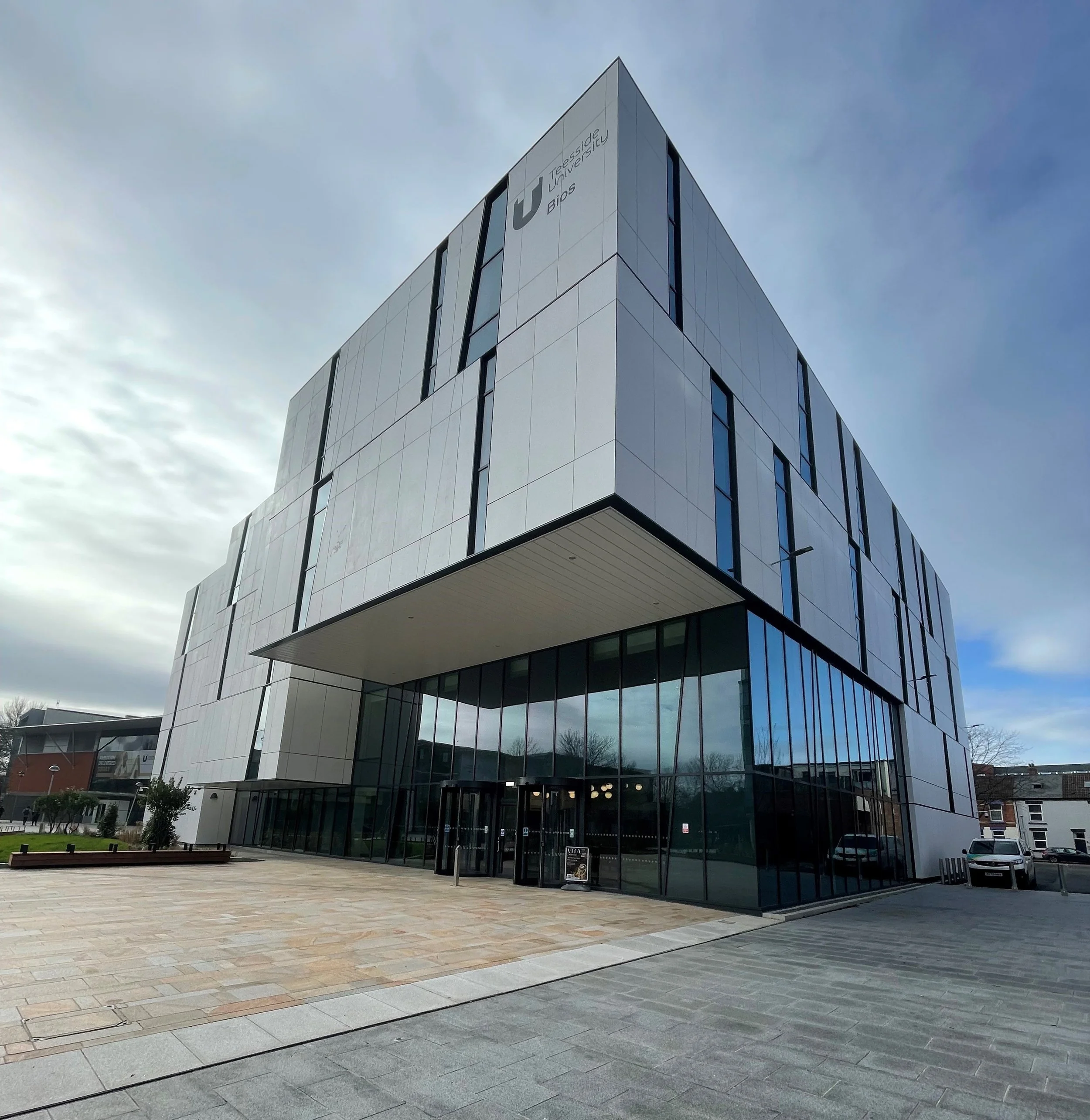
Mainer Associates supported Wates Construction with multi-disciplinary sustainability services for the £36.9m BIOS Building at Teesside University, achieving BREEAM ‘Outstanding’. Our work included Whole Life Carbon Assessment, Life Cycle Analysis, and Life Cycle Costing, helping the project meet an ambitious embodied carbon target of 698 kg CO₂e/m², below the client’s goal of 750 kg CO₂/m².
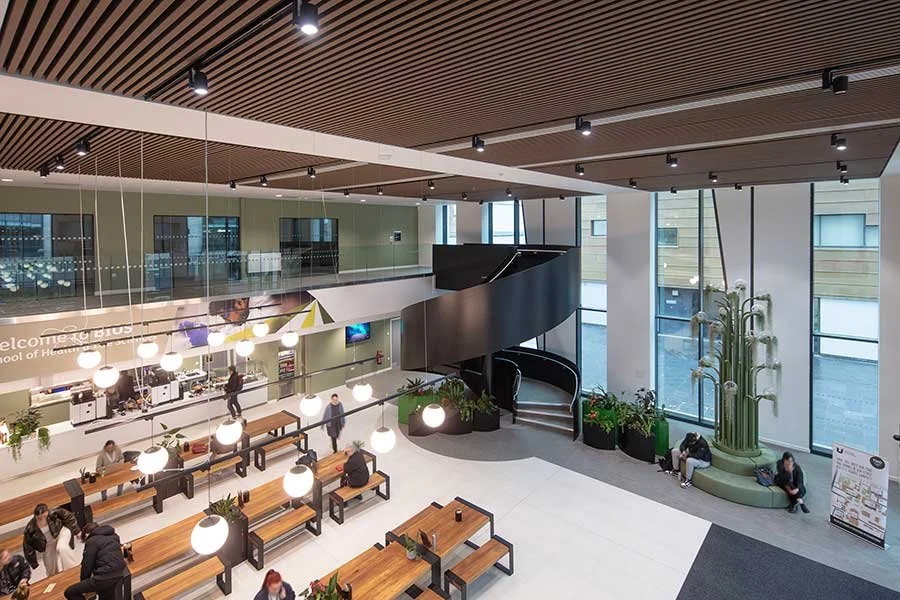
The facility, part of the University’s School of Health & Life Sciences expansion, features cutting-edge laboratories for science and clinical disciplines, contributing to Teesside’s transformative campus masterplan. Key innovations included low-carbon steel construction and strategic material selection, balancing carbon savings with cost efficiency.
Highlights
Specification
Education
Services
BREEAM, Whole Life Carbon Assessment, Life Cycle Analysis, Life Cycle Costing
Case Study: BIOS, Teesside University
Client: Wates Construction
Location: Middlesbrough, UK
Certifications Achieved: BREEAM ‘Outstanding’
Overview
Mainer Associates was appointed to deliver multi-disciplinary sustainability services for the BIOS Building, part of Teesside University’s School of Health & Life Sciences expansion. The facility provides state-of-the-art laboratories for science and clinical disciplines, forming a key element of the University’s wider £275m campus transformation.
Our services included:
BREEAM New Construction assessment
Whole Life Carbon Assessment (WLCA)
BREEAM Life Cycle Analysis
BREEAM Life Cycle Costing
Sustainability & Whole Life Carbon
A core part of the project was achieving a low embodied carbon footprint while delivering high-quality, resilient facilities. Mainer Associates conducted a full Life Cycle Assessment, quantifying the building’s embodied carbon at each RIBA stage. Our findings demonstrated that the project achieved 698 kg CO₂e/m², exceeding the client’s target of 750 kg CO₂/m².
To reduce embedded carbon, we worked closely with Wates Construction to:
Identify low-carbon construction materials, such as PEIKKO DeltaBeams, which use 90% recycled steel and renewable energy in production.
Evaluate the cost and carbon impact of alternative materials, including those with longer transport distances.
BREEAM Performance
Mainer Associates delivered the LCA Stage 5 assessment and the post-construction BREEAM assessment, enabling the BIOS Building to achieve BREEAM ‘Outstanding’ certification in February 2025.
Outcome
The BIOS Building represents a benchmark for sustainable, high-performance educational facilities. Key achievements include:
BREEAM Outstanding certification
Embodied carbon reduced to 698 kg CO₂e/m²
Innovative use of low-carbon construction methods
Alignment with Teesside University’s ambitious campus masterplan
The building officially opened in September 2023 and continues to support cutting-edge teaching and research in the sciences and clinical disciplines.
Digital Life, Teesside University
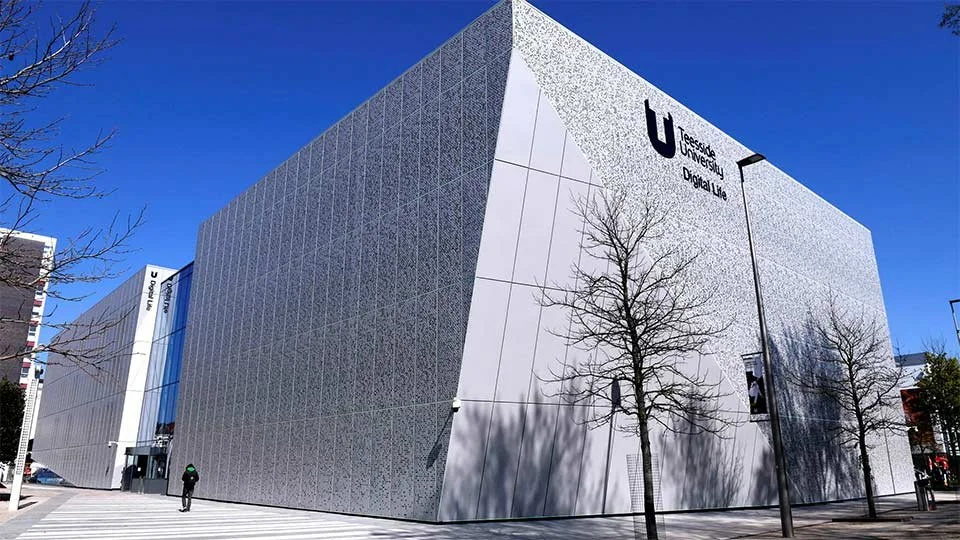
Mainer Associates supported Wates Construction Ltd by delivering the BREEAM New Construction assessment, acting as BREEAM Accredited Professional, and conducting Whole Life Carbon, Life Cycle Assessments, Life Cycle Costing, and Pre-Demolition Audit for the Digital Life building. The project achieved an impressive BREEAM ‘Outstanding’ rating.
Digital Life is a cutting-edge facility that combines physical and digital production and study, featuring adaptable teaching labs, digital art studios, and a unique 750-seat reconfigurable auditorium. Serving both the University and the wider Teesside community, it supports innovative learning and research for the School of Computing, Engineering & Digital Technologies.
Completed in April 2025, Digital Life embodies a sustainable and forward-thinking approach, designed to meet future technological demands.
Highlights
Specification
Education
Services
BREEAM, BREEAM AP, Whole Life Carbon Assessment, Life Cycle Analysis, Life Cycle Costing, Pre-Demolition Audit
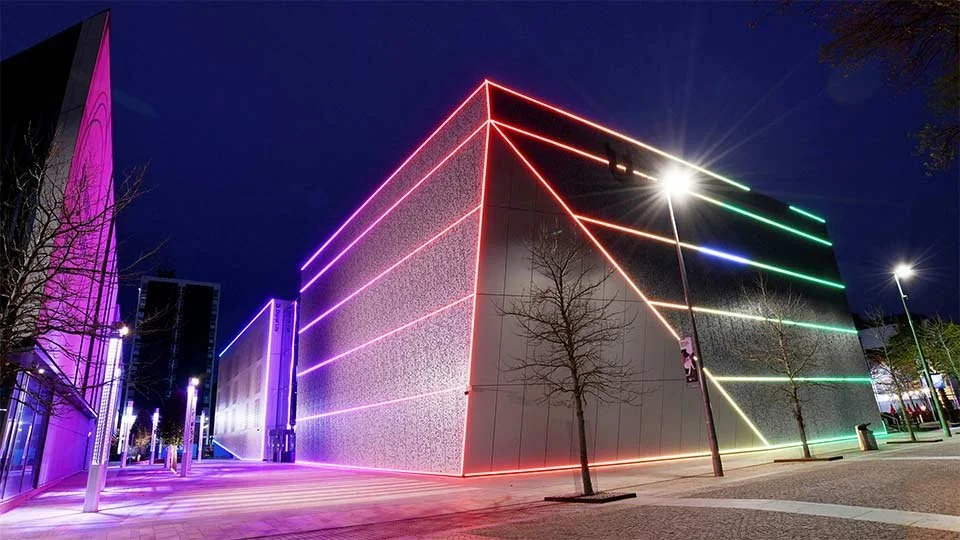
Case Study: Digital Life, Teesside University
Client: Wates Construction
Location: Middlesbrough, UK
Certifications Achieved: BREEAM ‘Outstanding’
Overview
Digital Life is a flagship £40m higher education facility at Teesside University, designed to support the School of Computing, Engineering & Digital Technologies. The building delivers cutting-edge teaching, research and collaboration spaces, including smart laboratories, digital studios and a 750-seat reconfigurable auditorium.
Completed in 2025, the project set ambitious sustainability targets, including achieving BREEAM ‘Outstanding’ certification and aligning with a net zero embodied carbon strategy.
Role: Lead BREEAM Assessor
Acting as Lead BREEAM Assessor, Mainer Associates played a central role in guiding the project through the full BREEAM New Construction assessment process—from early design through to post-construction certification.
Key responsibilities included:
Managing the BREEAM assessment and certification process
Acting as BREEAM Accredited Professional (AP) to influence design decisions
Coordinating evidence submission across the design and construction team
Providing strategic sustainability advice across all RIBA stages
Leading the post-construction assessment to secure final certification
Sustainability Strategy & Delivery
Early Design Integration
A key success factor was embedding BREEAM requirements from the outset. Working closely with the client, design team, and contractor, the project adopted a fabric-first and all-electric design approach, prioritising:
High-performance building envelope (low U-values)
Optimised glazing strategies
Passive design principles
Low Carbon & Energy Strategy
The building was designed as a fully electric facility, incorporating:
High-efficiency heat recovery heat pumps
Mechanical ventilation with heat recovery
Roof-mounted photovoltaic (PV) arrays to reduce operational energy demand
This approach supported both BREEAM energy credits and the wider ambition of reducing operational carbon emissions.
Whole Life Carbon Integration
Alongside the BREEAM role, Mainer delivered Whole Life Carbon Assessment (WLCA), Life Cycle Analysis (LCA), and Life Cycle Costing (LCC), ensuring alignment between environmental performance and commercial viability.
This enabled:
Data-driven decision-making on materials and systems
Reduction of embodied carbon through specification choices
Integration of circular economy principles
Collaboration & Stakeholder Engagement
As Lead Assessor, a critical aspect of the role was coordinating a large multidisciplinary team, including architects, engineers, cost consultants and contractors.
This involved:
Establishing clear BREEAM responsibility matrices
Running design workshops and progress reviews
Ensuring timely evidence collation and compliance tracking
Supporting the contractor through construction-phase requirements
The project is recognised as a strong example of collaborative sustainability delivery, with early engagement enabling efficient credit achievement.
Outcome
The Digital Life building successfully achieved:
BREEAM ‘Outstanding’ certification (post-construction)
A high-performance, future-ready education facility
Alignment with net zero embodied carbon ambitions
The project now stands as a benchmark for sustainable higher education buildings, supporting advanced digital learning while minimising environmental impact.
Key Value Delivered
Leadership of a successful BREEAM Outstanding certification
Integration of whole life carbon thinking alongside BREEAM
Strong design-stage influence improving sustainability outcomes
Effective team coordination and compliance management
Delivery of a building that supports both innovation and environmental responsibility